.webp) reviewgamesh5.com
reviewgamesh5.comFall Guys – Crown Jam: The Ultimate Tips and Guides for Winning More Games
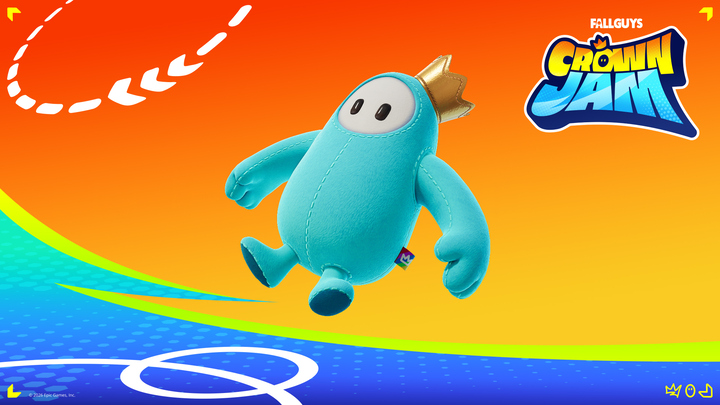
Fall Guys – Crown Jam offers an exciting party-game experience built around colorful characters, unpredictable obstacles, competitive challenges, and the desire to reach the finish line before everyone else. Whether you are a beginner learning the basics or an experienced player looking to improve your performance, understanding movement, timing, positioning, and decision-making can make a significant difference. Every round presents a new opportunity to develop your skills, avoid mistakes, and outplay your opponents. Although luck can sometimes influence the outcome of a chaotic match, consistent success usually comes from recognizing patterns, choosing efficient routes, and knowing when to take risks.
This guide explores practical tips and strategies for improving your performance in Fall Guys – Crown Jam. From learning the controls and mastering basic movement to handling crowded platforms, navigating difficult obstacles, and preparing for final challenges, each section focuses on skills that can help you become a more confident player. The goal is not simply to survive individual rounds but to develop a repeatable approach that makes your gameplay more efficient and enjoyable. By practicing the techniques described below, you can reduce unnecessary mistakes, adapt to unfamiliar situations, and improve your chances of reaching the crown.
1. Understand the Basics Before Entering Competitive Rounds
Before attempting advanced techniques, spend time understanding the fundamental mechanics of Fall Guys – Crown Jam. Party games built around obstacle courses often appear simple because the controls are easy to learn, but performing consistently requires a good understanding of movement, jumping, balance, and environmental hazards. Small mistakes can have major consequences when you are racing against other players or trying to cross a narrow platform. Knowing how your character responds to movement inputs will help you react more effectively when the course becomes crowded or unpredictable.
Start by learning how to move in different directions, jump over gaps, adjust your position in midair if the game permits it, and recover after landing. Pay attention to how quickly your character accelerates, how much space is needed to stop, and how movement changes when you approach an edge. These details become especially important when navigating narrow bridges, moving platforms, or obstacles that require precise timing. Rather than immediately attempting to finish every course as quickly as possible, focus on maintaining control throughout the entire route.
Learn the Controls Through Short Practice Sessions
Practice each movement individually before combining several actions into complicated sequences. For example, try approaching an obstacle at different speeds and observe whether a running jump is more effective than jumping from a stationary position. If grabbing, diving, or other advanced actions are available in your version of the game, learn when those actions are useful and when they may create unnecessary risks.
A simple practice routine can help you develop reliable movement habits:
Focus on Control Rather Than Speed
Beginners often assume that the fastest player will always win. However, excessive speed can lead to missed jumps, poor positioning, and collisions with other competitors. A slightly slower approach that consistently avoids mistakes may produce better results than repeatedly attempting risky shortcuts.
As you become more comfortable with the controls, gradually increase your speed. The objective is to develop movement that feels predictable rather than relying on random reactions. When you know how far your character can jump and how quickly you can change direction, you can make better decisions under pressure.
2. Study Each Obstacle and Identify the Safest Route
Obstacle courses reward players who observe their surroundings before committing to a movement. Rotating barriers, moving platforms, swinging objects, narrow paths, and disappearing sections can require different strategies. Instead of treating every obstacle as something to rush through, identify its movement pattern and determine when the path is safest. A few seconds spent observing a difficult section may save much more time than recovering from a failed jump.
When approaching an unfamiliar obstacle, look for its direction of movement, the available landing areas, and the consequences of making a mistake. Some obstacles can be crossed directly, while others are easier to navigate by waiting for a favorable opening. If the game provides several possible routes, compare their lengths and risks. A longer path with stable footing can be more reliable than a short route that requires several precise jumps.
Read the Environment Before Moving
Pay attention to visual clues that indicate how an obstacle works. A rotating platform may provide a predictable window for crossing, while a swinging barrier may create a repeating opening. Moving platforms can also reveal useful timing patterns when you observe them for a moment before jumping.
Avoid focusing exclusively on your character. Look ahead to the next platform or landing zone so that you can prepare your movement before reaching it. This habit helps you connect individual actions into a smooth sequence rather than stopping suddenly after every obstacle.
3. Master Jumping, Landing, and Midair Control
Jumping is one of the most important skills in obstacle-based party games. A jump can help you cross gaps, avoid low obstacles, reach platforms, and maintain momentum through a course. However, successful jumping involves more than pressing a button at the correct moment. You must also consider your approach speed, the distance to the landing surface, the position of nearby players, and the direction in which your character will travel after leaving the ground.
One common mistake is jumping too early. When this happens, the character may reach the end of the jump before clearing the gap. Jumping too late can be equally dangerous because the character may already be falling when the input is registered. Practice approaching gaps from a consistent distance so that you can develop a reliable sense of timing.
Choose the Right Jumping Technique
Different situations require different approaches. A small gap may only require an ordinary jump, while a wider gap might require a running approach or an additional movement action if the game supports one. Jumping repeatedly without considering the environment can make your movement unpredictable and increase the likelihood of landing in a dangerous position
For a more controlled jump, follow this sequence:
- Identify the landing area before approaching the edge.
- Align your character with the center of the target platform.
- Build enough movement speed for the jump.
- Initiate the jump at an appropriate distance.
- Make small corrections if the game allows midair steering.
- Prepare for the next obstacle immediately after landing.
Improve Landing Accuracy
A successful jump is only useful if you land safely. Aim for the center of a platform whenever possible, particularly when the landing area is narrow or surrounded by hazards. Landing near an edge leaves less room to recover from momentum or an unexpected collision.
Avoid making large directional changes immediately before landing unless they are necessary. Sudden corrections can send your character away from the intended target. Instead, make small adjustments during the jump and prepare your next movement once your character has regained stable footing.
Practice Difficult Jumps Separately
If a particular jump repeatedly causes problems, identify exactly where the failure occurs. You might be starting too far away, approaching at the wrong angle, or correcting your direction too late. Changing one variable at a time makes it easier to discover a reliable solution.
Once the movement becomes consistent, practice connecting it to the obstacle before and after the jump. This creates a complete sequence that is easier to reproduce during a competitive round.
4. Navigate Crowded Areas Without Losing Momentum
Crowded areas are among the most unpredictable parts of a multiplayer obstacle course. Other players can block narrow passages, collide with your character, or create sudden changes in movement. Even when you understand an obstacle perfectly, a group of competitors can make the crossing significantly more difficult. Learning how to handle these situations is essential for players who want to finish more rounds consistently.
When approaching a crowded platform, avoid following the player directly in front of you without considering alternative routes. If everyone is attempting to use the same narrow entrance, the resulting congestion can slow the entire group. Look for open space, alternative approaches, or a brief opportunity to move through after the initial crowd has passed.
Use Positioning to Avoid Collisions
Your position relative to other players can influence how safely you navigate a difficult section. Running directly into the center of a large group increases the likelihood of losing control. When possible, approach from an open side and leave enough space to change direction if another player suddenly moves across your path.
However, staying too close to the outer edge can create a different problem. A collision may push you into a gap or off a narrow platform. The goal is to maintain enough space for controlled movement without sacrificing a safe route through the obstacle.
Know When to Wait
Waiting briefly can be a smart decision when several players are attempting a difficult jump or crossing a moving obstacle. If the path is blocked, rushing forward may cause you to fall alongside everyone else. Letting the initial group pass can create a clearer route and reduce the number of unexpected collisions.
Use waiting selectively rather than stopping at every crowded section. Observe how quickly the obstacle clears and whether another route is available. With practice, you will learn to distinguish between situations where patience saves time and situations where immediate movement is the better option.
Avoid Unnecessary Contact
If the game includes grabbing or other player-interaction mechanics, use them carefully and according to the rules of the mode. Unnecessary interaction can interrupt your own movement just as easily as it disrupts another competitor. In a race, maintaining a clean route is often more valuable than trying to interfere with everyone around you.
Focus on completing the course efficiently. When you prioritize your own positioning and timing, you become less dependent on what other players choose to do.
5. Manage Moving Platforms and Timed Obstacles
Moving platforms and timed hazards introduce a different challenge because their behavior changes continuously. A stationary obstacle can often be crossed through careful positioning, but a moving obstacle requires you to predict where it will be when you arrive. The most effective strategy is to observe the movement cycle, identify a favorable opening, and commit to the crossing when the conditions are suitable.
Watch the obstacle for several moments if you do not understand its timing. Determine whether it moves continuously, reverses direction, pauses at certain points, or follows a repeating sequence. Even an approximate understanding of the pattern can help you choose a safer moment to move.
Learn the Timing Cycle
For rotating obstacles, observe the direction and speed of rotation before crossing. For swinging hazards, identify the moment when the object moves away from your intended path. For moving platforms, check whether the platform is approaching, moving away, or temporarily aligned with the landing area.
Do not assume that an opening will remain available for long. Once you identify a suitable opportunity, prepare your approach so that you can use it without hesitation. Excessive waiting can sometimes cause you to miss a favorable timing window.
Keep Your Movement Simple
Complicated movement is not always necessary when dealing with timed obstacles. A straightforward jump or carefully timed run may be safer than attempting multiple jumps and directional changes. Choose the simplest action that reliably gets you through the hazard.
If you fail, observe the obstacle again before making another attempt. Repeating the same movement without changing its timing is unlikely to produce a different result. Identify whether you moved too early, too late, or too close to the hazard, and adjust accordingly.
Recover Quickly After a Mistake
Not every failed attempt ends a round immediately. If your character lands on a lower platform or returns to a recoverable position, assess the situation before moving again. Look for the nearest safe route and determine whether continuing is faster than restarting or taking an alternative path.
Quick recovery is an important competitive skill. Players who respond calmly to mistakes often perform better than those who panic and make several additional errors.
6. Build a Smart Strategy for Race and Survival Rounds
Different round types require different priorities. Race-style challenges reward reaching the finish line efficiently, while survival challenges may emphasize staying on a platform, avoiding hazards, or remaining in the competition until other players are eliminated. Applying the same aggressive strategy to every round can lead to unnecessary failures.
Before beginning a round, identify its main objective. In a race, focus on route efficiency and movement consistency. In a survival challenge, prioritize safe positioning and awareness of changing conditions. When a round combines movement and competition, balance progress with the need to remain in a recoverable position.
Race Rounds: Prioritize Consistency
In a race, your objective is to complete the course before the available qualification places are filled. Speed matters, but so does the ability to avoid mistakes. A player who falls repeatedly may lose more time than someone who follows a slightly longer but safer route.
Survival Rounds: Protect Your Position
Survival challenges often reward awareness and patience rather than constant forward movement. Avoid standing in areas that are likely to become dangerous, and pay attention to how the available space changes throughout the round. If a platform becomes crowded or a hazard approaches, move toward a safer position before your options disappear.
Maintain enough distance from other players to avoid unnecessary collisions. At the same time, do not move so close to an outer edge that a minor mistake immediately eliminates you. The safest position is one that provides room to react and access to another stable area if conditions change.
Adapt When the Objective Changes
A strong player does not rely on one fixed strategy. If a race becomes crowded, adjust your route. If a survival area becomes unstable, prioritize a safer position. If a shortcut becomes blocked, choose an alternative rather than forcing your way through.
This ability to adapt is especially important in a game where obstacles and player behavior can create unexpected situations. A flexible strategy helps you remain effective even when a round does not unfold as expected.
7. Avoid Common Mistakes That Cause Early Eliminations
Many failures in obstacle-based games come from a small number of repeated mistakes. Players may rush into hazards, jump without checking their landing area, follow a crowded route, or attempt a shortcut before learning how it works. These mistakes are understandable, particularly for beginners, but recognizing them can dramatically improve consistency.
One of the most common problems is reacting too late. A player may focus on clearing the current obstacle and fail to notice the next hazard approaching. Another common problem is making unnecessary movements when the character is already on a safe path. Every additional correction introduces another opportunity to lose control.
Stop Jumping Without a Purpose
Jumping can be useful, but it should serve a specific purpose. Repeatedly jumping on flat ground or near unpredictable hazards can make movement less controlled. Before jumping, ask whether the action helps you clear an obstacle, avoid danger, or reach a better position.
If running directly across a safe section is more efficient, remain on the ground. Saving jumps for situations that actually require them can make your overall movement more predictable.
Do Not Follow the Crowd Automatically
Following other players can seem convenient because they may appear to know the route. However, a large group can also make poor decisions, block the best path, or create unnecessary congestion. Observe the course independently and choose your route based on the available space and your own abilities.
If several players fall while attempting the same shortcut, consider taking a safer alternative. You do not need to repeat another player's mistake simply because many people are making the same attempt.
Learn From Every Failure
After falling or being eliminated, think about the moment when the problem began. Did you approach too quickly? Did another player block your path? Did you misjudge the distance of a jump? Did you enter a timed obstacle before it was safe?
Use a simple improvement process:
- Identify the exact mistake.
- Determine what caused it.
- Choose one adjustment.
- Apply the adjustment in your next attempt.
- Check whether the result improves.
This method turns failure into useful information. Instead of repeating the same error, you gradually develop a more reliable approach to difficult situations.
8. Improve Your Awareness, Reactions, and Decision-Making
Mechanical skill is important, but awareness often determines whether you can use that skill effectively. You need to recognize hazards, monitor other players, anticipate changes, and select an appropriate action before the situation becomes dangerous. Good awareness allows you to prepare in advance instead of reacting only after a problem appears.
One useful habit is to divide your attention between three areas: your character's immediate position, the next obstacle, and the movement of nearby competitors. Your character's position helps you maintain control, the next obstacle determines your upcoming action, and nearby players indicate whether your route might become crowded or blocked.
Look Ahead to Prepare Your Next Move
Try to identify the next landing area while you are still approaching the current obstacle. This gives you time to adjust your direction before you reach a critical point. Looking ahead also helps you avoid stopping unexpectedly after landing, which can cause collisions with players behind you.
Do not attempt to monitor every part of the screen simultaneously. Focus on the information that matters most for your immediate decision. With practice, switching attention between your character, the course, and nearby players becomes more natural.
Make Decisions Based on Risk
Not every risky action is a bad decision. Sometimes a shortcut is necessary to qualify, or a difficult jump provides the best opportunity to avoid elimination. The key is to understand the potential reward and the consequences of failure.
Consider these questions before committing to a difficult move:
- Is the current route blocked or too slow?
- Is the alternative route realistically achievable?
- What happens if the attempt fails?
- Is there enough time to recover?
- Would waiting create a safer opportunity?
When the consequences of failure are severe, prefer actions with a high chance of success. When the round requires an aggressive move, take the risk deliberately rather than acting impulsively.
Stay Calm Under Pressure
Competitive rounds can become stressful when you are close to qualifying or approaching the final stage. Stress may cause you to rush, overcorrect, or ignore familiar movement patterns. Developing a consistent routine helps reduce these problems.
Take a moment to identify the next obstacle, choose your movement, and execute the action. If you make a mistake, concentrate on the next opportunity instead of dwelling on the previous one. Staying calm allows you to make decisions based on the situation rather than frustration.
9. Prepare for Final Rounds and Crown Challenges
Final rounds often feel more difficult because the competition is smaller and every mistake carries greater consequences. Reaching the final stage is an achievement, but winning requires you to apply your skills under pressure. The best approach is to remain patient, understand the final objective, and avoid taking unnecessary risks simply because you are close to victory.
First, identify the specific conditions required to win. Some finals may focus on survival, while others may involve reaching a target or interacting with an objective. The exact strategy depends on the mechanics of the mode, so observe the environment and determine which actions directly contribute to victory.
Prioritize Survival When Necessary
In a survival-based final, remaining in a safe position may be more valuable than attempting to interfere with opponents. Watch the movement of the arena and identify which areas are likely to become dangerous. Move early enough to avoid being trapped, but do not make unnecessary movements when your current position remains safe.
Pay attention to the available space. As the round progresses, safe areas may become smaller or more crowded. Planning your next move before the current position becomes unusable gives you more options and reduces the chance of being forced into a risky escape.
Time Your Approach to the Crown
If your version of Crown Jam includes a final objective that requires reaching or touching a crown, do not assume that simply arriving first guarantees victory. The timing and interaction requirements depend on the mode's rules. Observe the objective carefully and approach it when you can complete the required action safely.
Avoid making a last-second jump without understanding the target's position or movement. If the objective is moving or requires a specific interaction, practice recognizing the correct opportunity. A controlled final approach can be more effective than a desperate attempt that misses the target.
Watch Your Opponents Without Losing Focus
Final-round opponents may change direction, take shortcuts, or attempt to reach the objective before you. Monitor their general positions so you can anticipate competition for important routes. However, do not spend so much time watching other players that you overlook a hazard directly in front of you.
Concentrate on the actions that improve your own chances of winning. Good positioning, accurate movement, and appropriate timing remain valuable even when other players behave unpredictably.
Build Confidence Through Repetition
If you frequently reach the final round but struggle to win, review the decisions that led to your elimination. You may be moving too early, choosing a crowded route, or taking risks that are unnecessary for the objective.
Practice the specific skills that cause problems instead of trying to change your entire playstyle at once. Small, consistent improvements can help turn regular final-round appearances into more successful finishes.
10. Create a Practice Routine and Track Your Progress
Improving at Fall Guys – Crown Jam becomes easier when practice has a clear purpose. Playing many rounds can help you gain experience, but repeating matches without reflecting on mistakes may lead to slow progress. A simple training routine allows you to focus on specific weaknesses, measure improvement, and gradually develop more consistent gameplay.
Begin by identifying your three most common problems. You might struggle with jumping across gaps, handling crowded platforms, or reacting to moving hazards. Choose one problem for each practice session and concentrate on improving it. Once you become more reliable in that area, move on to another skill.
Follow a Simple Daily Practice Plan
You do not need an extremely long training session to improve. Short sessions with specific goals can be more productive than playing for hours without a plan.
Consider the following routine:
- First 5 minutes: Review the controls and practice basic movement.
- Next 10 minutes: Focus on jumps, landings, and difficult obstacles.
- Next 10 minutes: Practice timing and navigating crowded sections.
- Next 10 minutes: Play complete rounds while applying your chosen techniques.
- Final 5 minutes: Review mistakes and identify one improvement for your next session.
Adjust the duration according to your available time and the practice opportunities provided by the game. The important part is to maintain a clear focus rather than following the exact schedule.
Develop a Flexible Long-Term Strategy
As your skills improve, expand your practice to include unfamiliar routes, more difficult jumps, and alternative ways to approach crowded obstacles. Continue using reliable techniques, but remain willing to experiment when a new situation demands a different solution.
Avoid judging your performance entirely by short-term results. A difficult round can still provide valuable experience if you learn something useful from it. Consistent practice, thoughtful adjustments, and a willingness to adapt will help you become a more capable player over time.