The Physics of the Pivot Analyzing the Oversteer Momentum Cancel in Tank Drift
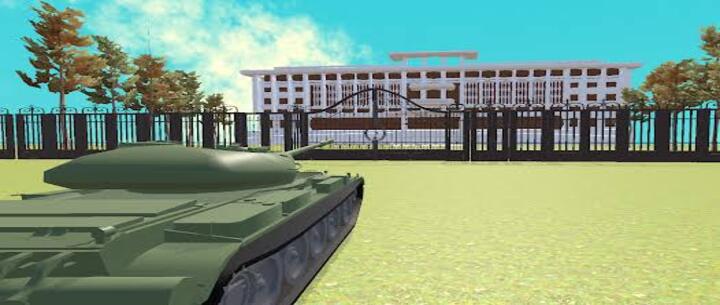
When evaluating the mechanical depth of modern vehicular combat simulators, few phenomena are as thoroughly documented and fiercely debated as the Oversteer Momentum Cancel in the competitive game Tank Drift. Initially marketed as a straightforward arcade experience where players navigate heavily armored vehicles through destructible environments, the game quickly morphed into a hyper competitive esports title purely due to an anomaly in its physics engine. This specific anomaly allowed players to manipulate the interaction between continuous tracks and the digital terrain, creating a movement technique that defied the intended parameters set by the developers. The Oversteer Momentum Cancel, commonly abbreviated by the player base as the OMC, completely shattered the skill ceiling and forced a community wide reevaluation of how digital physics can be weaponized.
Understanding the profound impact of this mechanic requires a deep dive into the mathematical framework of the game engine, specifically how it calculates surface friction, center of mass, and angular velocity during high speed maneuvers. By dissecting the evolutionary timeline of this singular exploit, we can observe the fascinating intersection of developer intent and player ingenuity. What began as a mere graphical stutter during a sharp turn evolved into a mandatory technique required for high level play, fundamentally altering the trajectory of the game over its multi year lifespan. This comprehensive analysis will explore the technical underpinnings, the historical development, and the lasting legacy of the Oversteer Momentum Cancel, proving that sometimes the most defining feature of a game is an unintended mathematical error hidden within lines of code.
The Early Beta and the Discovery of Friction Anomalies
During the initial closed beta testing phase in late development, players experienced what appeared to be a standard vehicular physics model built on a foundational friction algorithm. The developers intended for tanks to feel incredibly weighty, simulating immense tonnage by heavily penalizing sharp turns with extreme speed reductions. Players who attempted to corner too tightly were met with a severe loss of forward momentum, as the virtual tracks generated massive amounts of simulated friction against the digital terrain. This heavy friction model was meant to encourage tactical positioning and pre planned route navigation rather than reflexive driving, creating a slower and more methodical pacing for the overall gameplay loop.
However, it was not long before top tier simulation enthusiasts noticed a microscopic flaw in the way the engine calculated dynamic friction when multiple directional inputs were applied simultaneously. A beta tester discovered that by feathering the reverse throttle precisely at the apex of a turn while simultaneously engaging the independent turret rotation mechanism, the game engine would briefly suspend the friction calculation. This momentary suspension allowed the tank body to rotate independently of its forward velocity vector. The result was a dramatic sliding motion where the heavily armored vehicle would drift across the terrain without losing any of its forward speed, completely bypassing the intended weight penalties programmed into the movement system.
This anomaly occurred because the physics engine prioritized turret rotational data over track friction data when processing simultaneous inputs within a single frame. The game essentially forgot to apply the stopping force to the tracks because its processing power was momentarily diverted to rendering the complex physics of the heavy turret swinging across the central axis. This early discovery was initially dismissed by the casual player base as a useless visual glitch, a mere curiosity that offered no tactical advantage. But for the dedicated competitive scene that was quietly forming in the background, this friction anomaly was the holy grail of movement mechanics, opening the door to an entirely new dimension of high speed vehicular combat.
Understanding Tread Torque and Surface Variables
As the game officially launched and the player base expanded, the mechanics behind the friction glitch were completely deconstructed by the community. It became clear that executing the Oversteer Momentum Cancel was not merely about pressing buttons simultaneously, but about understanding the complex mathematical relationship between tread torque and the environmental surfaces. Tread Velocity Synchronization became the first major concept that players had to master. This referred to the precise speed at which the inner and outer tracks needed to move in opposite directions to initiate a drift without triggering the engine traction penalty algorithm. If the velocity discrepancy between the left and right tracks exceeded a certain threshold, the game would instantly snap the vehicle to a halt, punishing the player with a total loss of momentum.
To consistently achieve the perfect synchronization, players had to factor in the specific environmental conditions of every single map in the competitive rotation. Grip Threshold Limitations varied wildly depending on the virtual material the tank was traversing, demanding a profound level of memorization from professional players. Muddy terrains required a much shallower angle of engagement and a longer reverse throttle input, whereas urban concrete environments allowed for aggressive, instantaneous snaps that maximized rotational speed. The engine calculated these surface variables dynamically, meaning that even a slight transition from dirt to asphalt mid drift could completely ruin the trajectory and send the tank spinning out of control into a vulnerable position.
- The initial steering angle must be exactly between fifteen and twenty degrees off the forward vector.
- The turret must counter rotate precisely opposite to the chassis direction to shift the center of mass.
- The throttle must be fluttered to maintain engine RPM without fully engaging the forward drive gears.
Mastering these variables required hundreds of hours of dedicated practice in empty custom lobbies. Players developed specific telemetry overlays to track their input precision down to the millisecond, analyzing their tread torque values after every failed attempt. This period marked the transition of Tank Drift from a casual shooter into an incredibly demanding execution based simulator, where knowledge of mathematical thresholds was just as important as aiming proficiency.
Frame Perfect Inputs and the Initiation Phase
By the beginning of the first official competitive season, the execution of the Oversteer Momentum Cancel had been standardized into a strict sequence of frame perfect inputs. Operating at sixty frames per second, the game demanded that players initiate the directional shift, the reverse throttle tap, and the turret counter rotation within a microscopic four frame window. This translated to roughly sixty six milliseconds of real time, a reaction window that punished the slightest human error. Failing to input the sequence within this tight timeframe resulted in a dead slide, a state where the tank would lose all momentum and become completely stationary, making the player an easy target for enemy artillery fire.
The initiation phase became a psychological barrier that separated amateur players from true professionals. Because the technique required such immense digital dexterity, many players adopted unconventional controller grips, physically altering how they held their peripherals to access the thumbsticks and trigger buttons simultaneously. The claw grip became ubiquitous among the top echelon of the leaderboard, allowing players to manipulate the turret axis while simultaneously modulating the analog acceleration with a level of precision that standard grips simply could not accommodate.
Furthermore, the hardware itself became a massive variable in a players ability to perform the initiation phase consistently. Controller polling rates and monitor input latency were intensely scrutinized by the community, as a delay of even ten milliseconds could shift the players inputs completely outside of the required four frame window. The sheer physical demand of performing this sequence dozens of times per match led to widespread discussions about hand fatigue and ergonomics, highlighting just how mechanically demanding the game had become due to this singular physics exploit.
The Weight Rebalance and Patch One Zero Four
Recognizing that their game had fundamentally changed, the development team attempted to rein in the rampant drifting with the infamous Patch One Zero Four. Released exactly one year after launch, this patch was intended to completely eliminate the Oversteer Momentum Cancel by fundamentally altering the weight distribution values of all vehicles across the board. The developers increased the virtual mass of the tank chassis while simultaneously reducing the rotational inertia of the turrets. Theoretically, this meant that spinning the turret would no longer generate enough counter force to suspend the engine friction algorithm, thereby grounding the tanks and forcing players to rely on traditional, slower turning mechanics.
The immediate aftermath of the patch was pure chaos within the competitive community. For the first two weeks, it appeared that the developers had succeeded. The traditional drifting method was completely defunct, resulting in sluggish matches that felt entirely alien to the established player base. Viewership for competitive streams plummeted, and top players openly expressed their frustration with the sudden removal of the games most defining mechanical skill gap. The game felt heavy, unresponsive, and devoid of the dynamic pacing that had made it so popular in the first place.
However, the player base possessed a collective ingenuity that far surpassed the developers internal testing capabilities. By deeply analyzing the new weight distribution values, a small group of players realized that the patch had not removed the friction suspension anomaly, but merely shifted its activation requirements. Because the chassis was now significantly heavier, it required a more violent shift in momentum to trigger the glitch. This discovery led directly to the creation of an entirely new, significantly more complex method of executing the movement, proving that the player bases dedication to maintaining the mechanic was absolute.
The Evolution of the Reverse Entry Technique
The answer to the developers heavy handed patch was the Reverse Entry Technique, a maneuver so visually bizarre and mechanically complex that it completely broke the visual logic of the game. Instead of initiating the drift from a forward driving position, players discovered that by accelerating backward, snapping the chassis ninety degrees, and immediately slamming the forward throttle while unlocking the turret suspension, the game engine would buckle under the conflicting directional physics. The increased weight of the chassis, combined with the sudden inversion of momentum, forced the collision detection system to momentarily deactivate the track friction entirely to prevent the vehicle from flipping over.
This resulted in tanks hurdling across the map completely backward at maximum forward velocity, gracefully sliding around corners while their front armor faced the pursuing enemies. The Reverse Entry was incredibly difficult to learn, requiring players to conceptually invert their directional controls while managing the same microscopic frame windows that defined the original technique. It demanded a profound level of spatial awareness, as players had to navigate complex urban maps while looking through the rear view camera, calculating collision trajectories in reverse while actively returning fire at their opponents.
The sheer difficulty of the Reverse Entry widened the skill gap to an unprecedented degree. While the original drift could eventually be learned by dedicated casual players, the reverse variant required an almost unnatural level of hand eye coordination and spatial processing. The competitive scene quickly stratified, dividing players into those who could consistently perform the Reverse Entry under pressure and those who were left behind in the lower tiers of the ranking system. This era cemented the mechanic not just as an exploit, but as a defining feature of the games core identity.
Hitbox Displacement During Maximum Rotation
As players pushed the Reverse Entry Technique to its absolute limits, another fascinating quirk of the games engine was exposed related to collision meshes and damage registration. When a tank was locked into a maximum speed oversteer drift, the visual rendering of the vehicle became desynchronized from its actual server side hitbox. The Ghost Hitbox Phenomenon became a critical factor in high level engagements, altering how players approached combat entirely. Because the rotational velocity of the drifting tank exceeded the engines update rate for positional tracking, the actual vulnerable hitbox trailed slightly behind the visual model of the tank, creating a localized area of invulnerability on the leading edge of the vehicle.
Players immediately weaponized this displacement, utilizing the drift not just for mobility, but as a defensive evasion technique. By initiating a sharp drift exactly when an enemy fired their main cannon, a player could force the incoming projectile to pass harmlessly through the front half of their visual model, effectively dodging shots that appeared to be direct hits on screen. This added a layer of fighting game style invincibility frames to the vehicular combat, requiring players to predict enemy firing patterns and time their drifts to maximize their defensive capabilities while maintaining aggressive positioning.
Predicting and countering the ghost hitbox required intimate knowledge of the servers latency and the specific rotational speed of different tank classes. Heavy tanks displaced their hitboxes less significantly but maintained the drift longer, while light tanks could practically teleport their hitboxes out of danger at the cost of extreme instability. The metagame evolved into a complex dance of baiting out enemy fire, initiating the evasive drift, and retaliating during the brief cooldown window of the opponents main cannon, all while sliding sideways at eighty miles per hour through destructible environments.
Server Tick Rates and Desynchronization Challenges
The reliance on such precise, frame specific mechanics eventually collided with the harsh reality of online multiplayer infrastructure. The competitive integrity of the Oversteer Momentum Cancel was heavily bottlenecked by the games server tick rate, which operated at a relatively low thirty updates per second. While the local game client processed the complex physics calculations at sixty frames per second, the server struggled to accurately verify the sudden, violent shifts in momentum generated by the drifting tanks. This discrepancy created massive desynchronization issues during crucial tournament matches, leading to intense frustration within the professional community.
During high stakes engagements, a player might perfectly execute the input sequence on their local machine, initiating a flawless reverse entry drift to evade incoming fire. However, if the server dropped a single packet of data or failed to register the microscopic turret counter rotation, it would forcefully correct the players position, violently snapping their tank out of the drift and rendering them completely stationary. These server corrections, known colloquially as rubber banding, became the most feared opponent in the game, randomly ruining flawless executions and heavily penalizing players who relied on maximum speed maneuvering.
The community continuously petitioned the developers to upgrade the server infrastructure to support a higher tick rate, arguing that the game had outgrown its original arcade networking code. Tournaments began enforcing strict ping limits, and organizers went to great lengths to ensure matches were played on localized servers to minimize the impact of latency. The constant battle against desynchronization highlighted the inherent tension between pushing the boundaries of an in game physics engine and the physical limitations of global internet routing, making consistency the most valuable trait a professional player could possess.
The Development of Counter Strategies and Blocking
As the drifting meta completely dominated the competitive landscape, players who lacked the mechanical execution to perform the technique consistently were forced to develop entirely new strategies to survive. This era saw the rise of the Anti Drift philosophy, a tactical approach centered around environmental manipulation, area denial, and predictive positioning. Instead of trying to outmaneuver the drifters, these tactical players focused on understanding the exact trajectory pathways required to execute the momentum cancel, using the map geometry to shut down those specific lanes of movement before the engagement even began.
The most prominent counter strategy involved weaponizing the games destructible environments. By deliberately collapsing buildings, destroying bridges, and creating artificial craters in the terrain, tactical players could completely alter the surface friction variables of a given area. Because the Oversteer Momentum Cancel required highly specific, predictable surface conditions to execute properly, filling a critical chokepoint with uneven rubble would instantly cancel any attempted drift, causing the aggressive player to crash and lose all momentum. This strategy transformed the game into a complex game of digital chess, where map control and terraforming became just as important as mechanical execution.
Additionally, defensive players developed advanced blocking techniques utilizing the heaviest tank classes in the game. By positioning themselves precisely at the apex of common drift corners, they could act as immovable physical barriers. When a high speed drifting tank collided with a stationary heavy tank, the physics engine heavily penalized the moving vehicle, transferring the kinetic energy into catastrophic module damage. These counter strategies ensured that the metagame remained healthy, preventing the high execution mechanics from completely invalidating slower, more methodical tactical approaches.
Competitive Dominance in the Golden Era Tournaments
The culmination of these intricate mechanics, counter strategies, and physics exploits reached its absolute zenith during the fifth year of the games competitive lifespan, an era widely regarded as the golden age of Tank Drift esports. The World Championship tournament of that year perfectly encapsulated the depth of the Oversteer Momentum Cancel, showcasing a level of vehicular mastery that transcended the games original design. Thousands of viewers tuned in to watch professional teams execute flawlessly synchronized reverse entry drifts, navigating complex urban environments with a level of precision that looked almost choreographed.
One specific match from the grand finals remains etched in the communitys collective memory. A lone player, caught entirely out of position and surrounded by three enemy vehicles, utilized a string of perfectly timed consecutive drifts to effortlessly weave through a barrage of crossfire. By chaining together alternating reverse entries and manipulating the ghost hitbox phenomenon to absorb what should have been lethal damage, the player managed to isolate and eliminate all three opponents within a span of forty seconds. This moment was not just a display of mechanical skill, but a complete mastery over the mathematical foundation of the game engine.
The golden era tournaments proved that the community had completely taken ownership of the games mechanics. The developers, who had previously attempted to remove the exploit, fully embraced it during this period, officially recognizing the drifting techniques in their broadcast analysis and even designing new maps specifically to accommodate high speed rotational movement. The Oversteer Momentum Cancel had transitioned from an unwanted glitch to a celebrated feature, defining the identity of the franchise and cementing its legacy in the annals of competitive gaming history.
The Modern Application and Enduring Legacy
Today, the landscape of Tank Drift has evolved, but the foundational legacy of the Oversteer Momentum Cancel remains permanently woven into the fabric of the games design. Modern iterations and sequels of the game have abandoned the accidental friction anomalies, opting instead to build the drifting mechanics directly into the core engine with dedicated physics algorithms and intentional control schemes. While these modern systems are more stable and accessible to the general player base, veterans of the original game often reflect on the raw, untamed nature of the original exploit with deep nostalgia.
The legacy of the movement technique extends far beyond just this specific title. It serves as a profound case study in how competitive communities interact with digital physics, demonstrating that players will always push the boundaries of a simulated environment to find the most optimal, unintended methods of victory. The dedication required to dissect frame data, calculate surface friction variables, and master microscopic inputs transformed a simple arcade game into an incredibly complex mechanical discipline.
Ultimately, the story of the tank drifting phenomenon is a testament to the symbiotic relationship between broken game code and player creativity. It highlights the beauty of emergent gameplay, where a simple mathematical oversight regarding turret rotation and track friction birthed one of the most mechanically demanding and visually spectacular esports techniques ever recorded. The Oversteer Momentum Cancel will forever stand as a monument to the endless ingenuity of the competitive gaming spirit.
Conclusion
In retrospect, the analysis of the Oversteer Momentum Cancel reveals a fundamental truth about the nature of competitive gaming. It is rarely the intended mechanics that define a games longevity, but rather the unintended quirks that allow players to express their mechanical supremacy. What the developers initially viewed as a critical flaw requiring an immediate patch, the community recognized as an opportunity for unprecedented skill expression. Through years of rigorous testing, frame analysis, and tactical adaptation, the player base effectively rewrote the rules of the game.
The journey from a simple friction suspension anomaly to the highly complex Reverse Entry Technique illustrates the relentless pursuit of optimization that drives the esports industry. It forced advancements in hardware utilization, tactical terraforming, and networking infrastructure, elevating the entire ecosystem surrounding the game. Tank Drift remains a masterclass in emergent mechanical depth, proving definitively that the most profound gameplay experiences are often born from the friction between strict digital physics and boundless human creativity.
The oversteer momentum cancel in Tank Drift redefined competitive play. This glitch transformed standard mechanics into a complex physics and frame data battle.